INTRODUCTION
This research analyzes portrayals of Black Greek-letter organizations (BGLOs) in archival photographs from 1900-1990s and the effects these depictions have on contemporary members' perceptions, knowledge and historical understanding of BGLO culture. Utilizing the photo elicitation interview (PEI), this study explores archival photographic portrayals of BGLOs as cultural artifacts of study.
More specifically, the study examines how the use of PEI as a research methodology can lead to more insightful and accurate representation of BGLO communities while demonstrating the importance between defining, more clearly, narrowed representation and stereotypes. This research helps demonstrate the importance of interpreting the past to make sense of current realities concerning collective responsibility, cultural integrity, and organizational sustainability.

Black Greek-Letter Organizations emerged in the early 20th century as vital communities for Black college students, offering sociocultural support, leadership opportunities, and academic amid racially hostile educational environments.
According to Parks and Malveaux (2008), BGLOs brought together students “dedicated to excellence, fostered kinship, and uplifted African Americans,” and produced visionary leaders such as Martin Luther King Jr., Barbara Jordan, Toni Morrison, and Reginald F. Lewis. Their founding was both a response to exclusion and a deliberate effort to create institutions that would advance collective racial progress.
Lawrence Ross (2000,2019) characterizes BGLOs as “a unique and vital part of 20th-century African American history,” highlighting their role in nurturing Black excellence and activism from the suffragette movement through the Civil Rights era. In the early years, these organizations provided spaces where young Black collegians could support one another while engaging in service, political advocacy, social gatherings, and leadership engagement.
Today, the nine fraternities and sororities, often referred to as “The Divine Nine,” now millions strong across Historically Black Colleges and Universities (HBCUs), Ivy League campuses, and institutions nationwide, continue this legacy of brotherhood, sisterhood, and service.In African American Fraternities and Sororities: The Legacy and the Vision, (2010) a host of scholars further situate BGLOs within a longstanding tradition of African American benevolent and secret societies, emphasizing their central role in civic action, philanthropy, and cultural expression. The membership of these organizations reads as a “who’s who” of Black leadership across generations, underscoring their enduring influence.
Despite their achievements, BGLOs face a complex set of challenges shaped by cultural, structural, and generational factors. One of the most pressing issues is the ongoing effort to eliminate hazing and strengthen risk-management practices. These problems continue to jeopardize member safety, damage organizational credibility, and undermine the integrity of the intake process.
Additionally, BGLOs are narrowly represented in mainstream and social media, solely highlighting the performative culture of stepping, strolling, and spectacle, overshadowing their intellectual, political, and community-driven traditions, where their historic commitments to scholarship, service, and social justice are often distorted.
In today’s visually driven digital culture, public personas reflect chapters’ perceived pressure to focus on image rather than substance. This noticeable shift has led to a noticeable decline in collective advocacy and civic engagement compared to earlier eras of BGLO activism.
At the organizational level, shrinking chapter sizes across numerous campuses, particularly at PWIs and smaller HBCUs, further strain the capacity of undergraduate members to sustain meaningful programming, leadership pipelines, and community service.
These structural limitations are intensified by uneven institutional support, as many student affairs professionals lack the cultural competency or training necessary to adequately advise and advocate for NPHC chapters.
As scholarship spanning that last three decades argues, the history of BGLOs demonstrates a profound and lasting impact, while the future of these groups remains filled with both possibility and urgent purpose. Their continued evolution will be critical in shaping new generations of leaders and advancing the cause of equity and excellence in higher education and beyond.


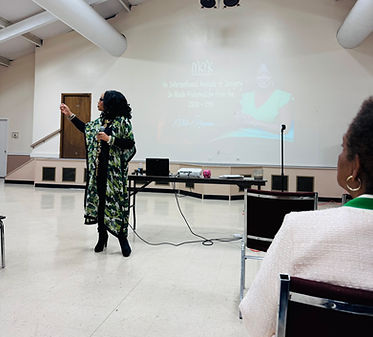


Impact of My Research
This research has the potential to make a significant and multifaceted contribution to the future of NPHC organizations by directly addressing the interconnected challenges of hazing culture, media misrepresentation, shrinking chapter capacity, and inconsistent institutional support.
By examining how archival imagery, visual narratives, and historical memory shape contemporary members’ understanding of BGLO identity, the study can illuminate the disconnect between the organizations’ founding purposes and current perceptions of their value and relevance. These insights may strengthen prevention efforts by reframing organizational culture in ways that discourage harmful initiation practices and elevate traditions rooted in service, scholarship, and collective uplift.
Additionally, the research can help BGLOs reclaim control over their public image by providing evidence-based strategies for countering superficial or inaccurate media portrayals with historically grounded, mission-centered storytelling. This work may inspire renewed social-justice engagement by reminding members of their organizations’ deep activist legacies and offering frameworks for modernizing that commitment for 21st-century contexts.
By highlighting the role of visual representation in fostering belonging, pride, and historical continuity, the study may also support recruitment and retention efforts for chapters facing declining membership. Finally, the findings can inform campus administrators and student-affairs professionals, equipping them with culturally responsive insights that improve advising, resource allocation, and overall institutional support for NPHC communities.